
280E and Cannabis Accounting: Maximizing COGS
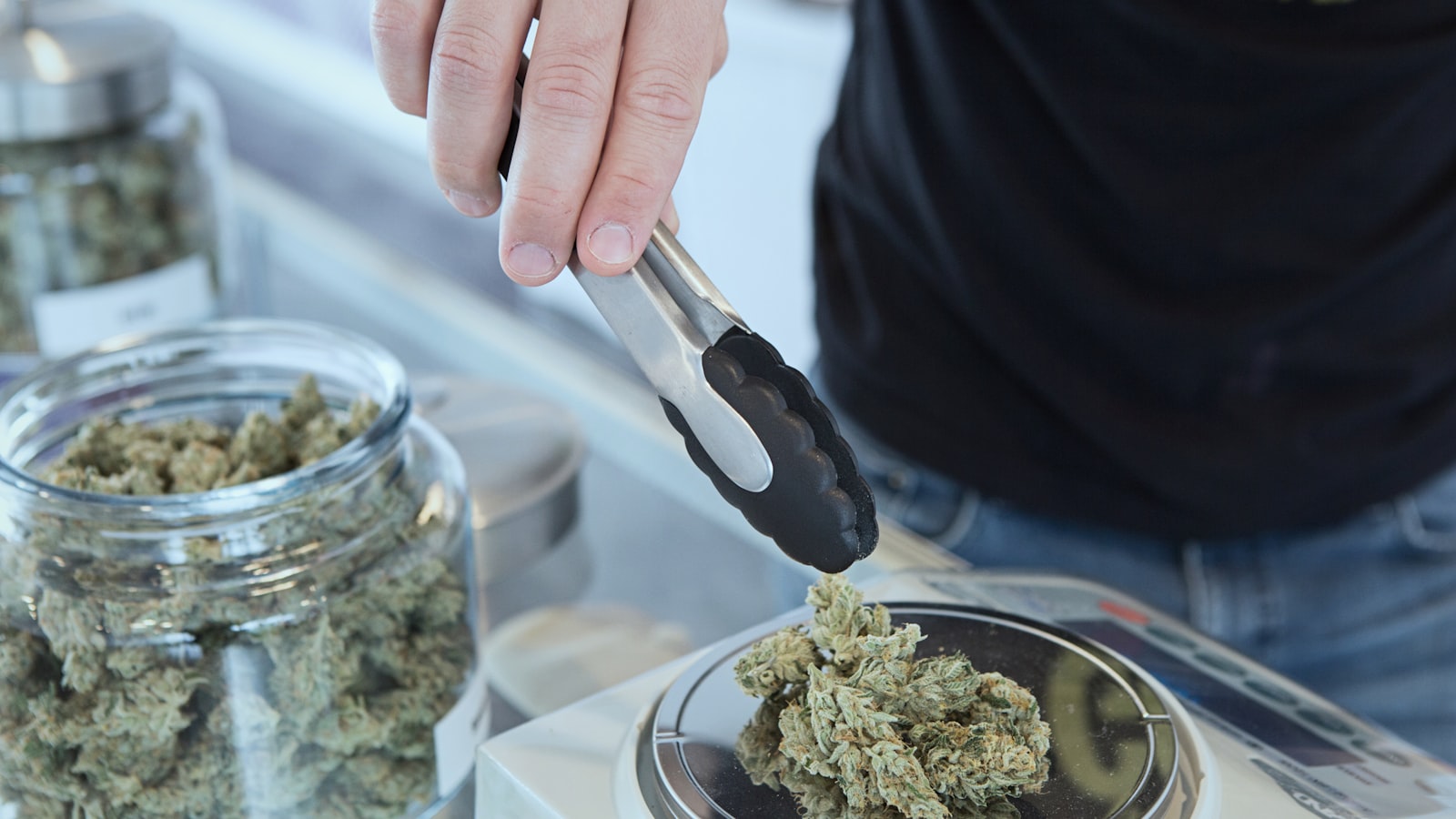
How does IRC 280E affect cannabis accounting? Section 280E of the Internal Revenue Code denies all ordinary business deductions and credits to any trade or business that traffics in a Schedule I or Schedule II controlled substance. For most cannabis operators, that means federal tax is calculated on a figure much closer to gross profit than net income. The only lawful offset is cost of goods sold (COGS), computed under Section 471. Building an accurate, defensible COGS model is therefore the central task in cannabis accounting and the primary lever on after-tax cash.
2026 update: Effective April 28, 2026, state-licensed medical cannabis and FDA-approved cannabis drug products moved to Schedule III under a Department of Justice Final Order, removing the 280E bar for qualifying medical activities beginning with the 2026 tax year. Adult-use cannabis remains on Schedule I, and a separate administrative hearing on rescheduling all cannabis to Schedule III concluded in July 2026 and now awaits an administrative law judge recommendation. This article covers what 280E still requires, how to maximize COGS under Section 471 for operations still subject to the rule, and how operators with mixed activities should be thinking about cost allocation going forward.
Why 280E Creates a Different Tax Reality for Cannabis
Section 280E was enacted in 1982 as part of the Tax Equity and Fiscal Responsibility Act, a direct legislative response to *Edmondson v. Commissioner*, where the Tax Court allowed a drug dealer to deduct ordinary business expenses including rent, telephone, and auto costs. Congress reversed that outcome for anyone trafficking in a controlled substance, disallowing all deductions and credits attributable to that trade or business.
The statute stops short of taxing gross receipts outright. Congress preserved the COGS offset to sidestep constitutional concerns, because COGS is treated as a reduction of gross receipts rather than a deduction. That distinction is the whole game for cannabis operators. Rent paid on a cultivation facility can be recovered through inventory, while the identical rent on a dispensary retail floor is permanently gone.
The financial gap between a business subject to 280E and one that is not can be enormous. A conventional retailer pays federal income tax on net profit after all expenses. A cannabis operator subject to 280E pays on a figure that may be 20 to 40 percentage points higher in effective rate terms, depending entirely on how much of its spending qualifies as a production cost under the COGS rules. Two operators with identical revenue and identical real-world margins can carry very different federal tax burdens based solely on how well each built its cost-accounting model.
What Section 471 Allows Into Inventory
The governing authority for what counts as COGS is Section 471 and its regulations. In Chief Counsel Advice memorandum 201504011, the IRS confirmed that a cannabis taxpayer must compute COGS using the Section 471 inventory-costing regulations as they existed when Section 280E was enacted, not the broader capitalization rules introduced later. That distinction matters because it limits the universe of capitalizable costs to what the original full-absorption and reseller regulations describe.
Producers: Full-Absorption Costing
A cultivator or processor is treated as a producer and uses the full-absorption inventory method. This captures:
- Direct materials, including seeds, clones, soil, nutrients, and packaging materials tied to the product
- Direct labor, meaning wages of employees who perform cultivation, harvesting, trimming, or processing
- Indirect labor such as supervisory wages for production staff
- Utilities and rent for the cultivation or processing space
- Depreciation and maintenance on production equipment and facilities
- Indirect materials and supplies consumed in growing or processing
- Quality control and inspection costs tied to production
The unifying principle is causation. A cost belongs in inventory only if it was incurred to produce the product being sold. Marketing, retail floor rent, dispensary staff wages, and executive compensation unrelated to production do not qualify, regardless of how they are recorded in financial statements.
One often-overlooked point: some indirect production costs must be capitalized regardless of the taxpayer’s book treatment, while others simply follow book treatment. Operators who keep their financial accounting and tax inventory methods aligned reduce the reconciling items an examiner can question. The narrower the gap between book and tax records, the easier the position is to defend.
Resellers: The Narrower Standard
A dispensary that purchases finished product for resale is treated as a reseller under Section 471. Resellers capitalize a much narrower set of costs: essentially the invoice price of the product, inbound freight, and the direct costs of getting inventory to the location. Operating costs, including retail rent, point-of-sale staff wages, marketing, and administrative overhead, stay outside inventory and are subject to full 280E disallowance.
This asymmetry is why the structure of a cannabis business matters so much. A vertically integrated operator that cultivates, processes, and sells may recover a substantial share of its overhead through the producer-side inventory rules. A pure dispensary recovers far less. The financial reporting and audit work for a vertically integrated cannabis company looks very different from that of a standalone retailer, because the cost-flow documentation requirements are orders of magnitude more detailed.
The 263A Trap
A common and expensive mistake is building a 280E cost model around Section 263A, the uniform capitalization rules enacted in 1986. CCA 201504011 addresses this directly: 263A cannot be used to pull more costs into inventory and thereby convert a 280E-disallowed expense into a recoverable one.
The logic is straightforward. If a cannabis taxpayer could capitalize a 280E-disallowed cost under 263A and recover it through COGS later, the permanent disallowance Congress intended would become a timing difference. Nothing in the legislative history suggests Congress meant to allow that, and the IRS has consistently taken the position that 263A neither expands nor contracts what a cannabis business may capitalize. The Congressional Research Service analysis of Section 280E reaches the same conclusion.
The practical takeaway is that 263A adds nothing to a cannabis operator’s position. Producers look to the pre-280E Section 471 full-absorption regulations. Resellers look to the Section 471 reseller rules. The decisive question is always whether a given expense is a genuine production cost under Section 471, and the 263A question is irrelevant once that is answered.
Building a Defensible COGS Model
Defensibility comes from method and documentation, not from aggressive classification. The goal is a cost flow that an examiner can trace from a general ledger entry through an inventory account to COGS, with a written rationale at each step.
Step 1: Map your operations by function. Separate production activity from selling and administrative activity, ideally at the entity or cost-center level. A vertically integrated operator should consider whether functional cost centers, or even separate legal entities, more accurately segregate the cultivation or manufacturing activity from the retail activity. The cleaner the separation, the more credible the COGS figure flowing from the production side.
Step 2: Classify every expense account. For each expense in the general ledger, designate it as production or non-production. For shared costs, establish a rational, consistently applied allocation base. Square footage is widely used and well-supported for splitting rent, utilities, and facility depreciation between production and retail areas. Headcount or labor hours can allocate supervisory wages. Whatever base you choose, apply it consistently year over year.
Step 3: Build inventory subledgers. Accumulate capitalized costs by product, batch, or lot, and reconcile them to both the financial statements and the state seed-to-sale tracking system every period. When the state regulatory inventory data and the tax inventory subledgers tell different stories, an examiner has an easy thread to pull.
Step 4: Document the rationale contemporaneously. Write a short, dated memo recording why each allocation base was chosen. A contemporaneous note explaining that rent was split 65 percent to cultivation based on a measured square-footage calculation carries far more weight than a verbal answer offered years after the fact. Treat the written rationale as part of the deliverable, not an afterthought.
Step 5: Stress-test the result. Compare COGS-to-revenue ratios and effective tax rates against industry norms. Be prepared to explain any figure that sits at an edge. The objective is to claim every dollar of COGS the law permits and document it so well that the claim survives scrutiny.
For cannabis companies preparing for an investor transaction or seeking to support enterprise value, a clean cost-accounting structure also matters for transaction advisory and quality-of-earnings work, where COGS defensibility directly affects adjusted EBITDA calculations.
Common Mistakes That Draw Examinations
Several patterns consistently invite IRS scrutiny.
Blurring production and retail costs. Treating dispensary rent, point-of-sale labor, or marketing expenses as inventoriable costs is the fastest path to a full disallowance plus penalties. Keep selling and administrative costs clearly outside inventory from the start.
Undocumented allocations. An allocation percentage with no supporting workpaper is treated as unsupported. The burden rests with the taxpayer, not the IRS.
Inconsistency across periods. Switching allocation bases between years, or between entities in a combined structure, signals that the numbers are being engineered toward a target. Consistency is itself evidence of good faith.
Letting financial records diverge from seed-to-sale data. When the two systems disagree on quantities, costs, or timing, examiners notice. Reconcile them on a regular cycle.
Relying on 471(c) without professional guidance. Section 471(c), added by the 2017 Tax Cuts and Jobs Act, lets certain small businesses follow their books for inventory. Some advisors have argued this could broaden inventoriable costs for qualifying cannabis taxpayers. The IRS has not blessed this position, and the analysis remains unsettled. Treat any 471(c) strategy as higher-risk and document it carefully.
The 2026 Rescheduling: What Changed and What Has Not
Effective April 28, 2026, state-licensed medical cannabis and FDA-approved cannabis drug products moved to Schedule III following a DOJ Final Order. Because those products are now in Schedule III rather than Schedule I or II, the Section 280E bar no longer applies to the trade or business of selling them. In an April 2026 announcement, Treasury and the IRS said forthcoming guidance will include a transition rule treating the rescheduling as effective for the entire taxable year that includes the effective date, meaning calendar-year medical cannabis operators may claim ordinary deductions for the full 2026 tax year for activities that no longer involve a Schedule I or II substance.
Adult-use cannabis remains on Schedule I. A separate expedited administrative hearing on rescheduling all cannabis to Schedule III ran from June 29 to July 15, 2026, and the matter now awaits a recommendation from the administrative law judge before the DEA acts. If that process concludes favorably, 280E would no longer apply to the adult-use market either. Until any such change is finalized and effective, adult-use operators must continue to file under the COGS-only model.
For mixed-activity operators, those with both qualifying medical and adult-use operations, the transition creates a new cost-allocation problem. Treasury and the IRS have said guidance will clarify how expenses are apportioned between Schedule III activity (where deductions are now allowed) and Schedule I activity (where 280E still applies), but that guidance was not yet final as of publication. This is a more complex version of the same allocation discipline described above, applied across two regulatory regimes rather than across production and retail functions. Operators should not wait for final guidance before building the records that will support the apportionment.
The bottom line is that 280E is lifting in stages, not all at once. For adult-use operators and for tax years still under examination, the full rigor of the COGS-only model remains required.
Frequently Asked Questions
What does IRC 280E actually prohibit?
Section 280E disallows all deductions and credits attributable to a trade or business that consists of trafficking in a Schedule I or Schedule II controlled substance under the Controlled Substances Act. It does not eliminate the cost of goods sold offset, because COGS is treated as a reduction of gross receipts rather than a deduction.
Does the April 2026 rescheduling eliminate 280E for all cannabis businesses?
No. The April 28, 2026 Final Order moved state-licensed medical cannabis and FDA-approved cannabis products to Schedule III, removing the 280E bar for those specific activities starting with the 2026 tax year. Adult-use cannabis remains on Schedule I and is still fully subject to 280E until broader rescheduling is completed.
Why can a cannabis cultivator put more costs in COGS than a dispensary?
Because the Section 471 regulations apply different standards to producers and resellers. A cultivator or processor is a producer that uses the full-absorption method, capturing direct materials, direct labor, and defined indirect production costs. A dispensary is a reseller that can capitalize only the acquisition cost of inventory and the direct costs of getting it to the location. Most retail operating costs fall outside those categories and are disallowed under 280E.
Can Section 263A be used to increase cannabis COGS?
No. IRS Chief Counsel Advice 201504011 explains that 263A cannot be used to capitalize 280E-disallowed costs into inventory. Because 263A is a timing provision, using it to recover a permanently disallowed expense would defeat the statute. Cannabis businesses look to the Section 471 regulations, not 263A, to determine what belongs in inventory.
What records should a cannabis company keep to defend its COGS?
Contemporaneous workpapers showing (1) the classification of every expense account as production or non-production, (2) the allocation base used for shared costs with measurements supporting it, (3) inventory subledgers reconciled to financial statements and state seed-to-sale records, and (4) dated memos explaining the rationale for each allocation decision. Reconstructed records prepared after an examination notice are far less persuasive than records made at the time.
What should mixed-activity operators do now given the 2026 rescheduling transition?
Build records today that can support an apportionment between Schedule III medical activity and Schedule I adult-use activity. Treasury guidance on the allocation methodology is expected but not yet final. Operators who have maintained clean functional cost-center separation will have a much easier time complying once that guidance arrives than those who will need to reconstruct the split retroactively.
Filed under: Accounting Standards Cannabis