
Restaurant Accounting: Prime Cost and the FICA Tip Credit
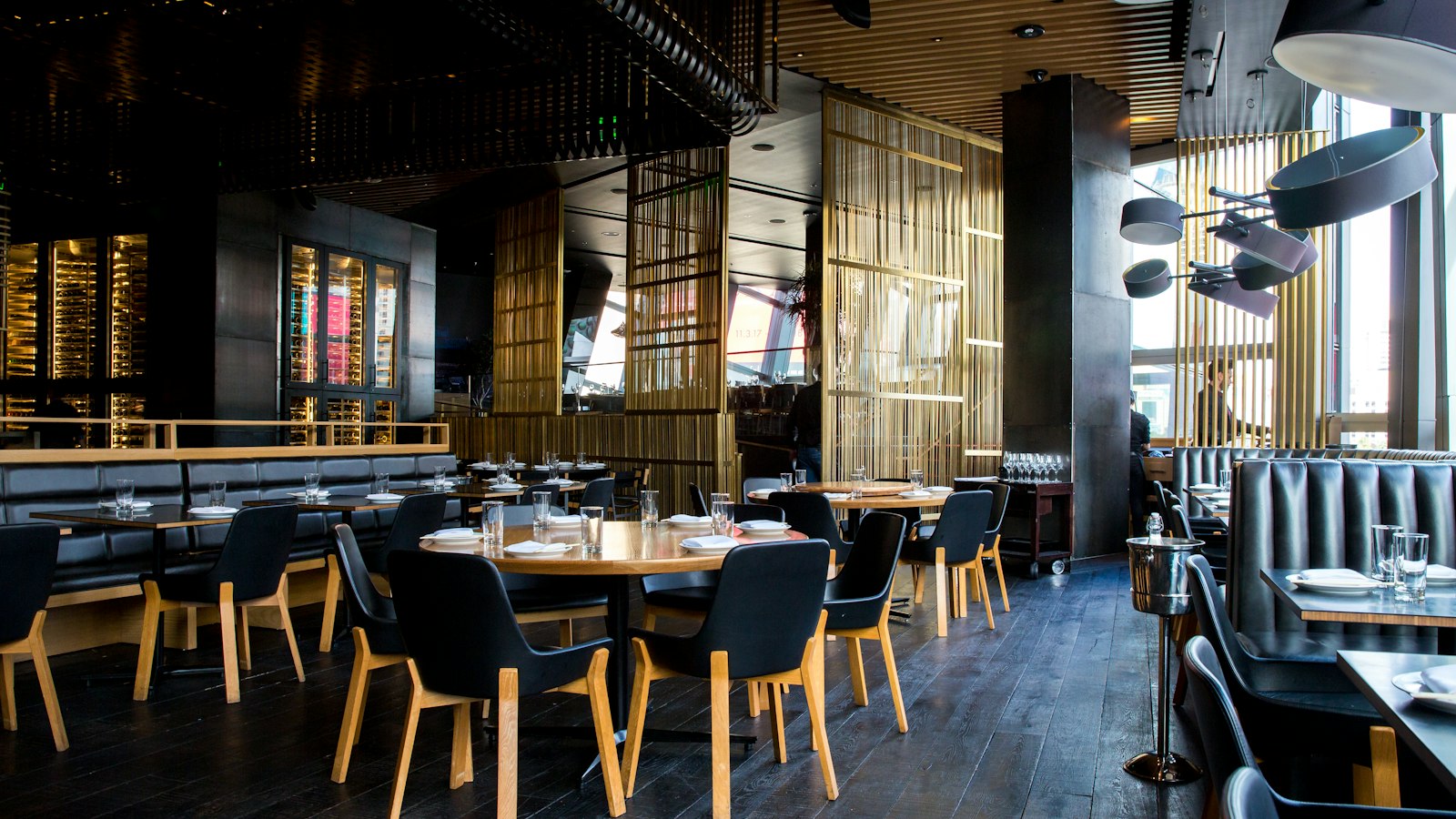
Restaurant and hospitality accounting centers on two fundamentals that separate profitable operators from struggling ones: controlling prime cost (the combined weight of food, beverage, and labor as a share of revenue) and claiming every tax credit the law provides, including the often-overlooked FICA tip credit under Section 45B of the Internal Revenue Code. A well-run restaurant tracks prime cost weekly, reconciles tips daily, and files Form 8846 each year to recover the employer share of payroll taxes on tipped wages. Get those mechanics right and the financial picture becomes considerably clearer.
What Makes Restaurant Accounting Different
Most businesses track revenue and expenses against a chart of accounts and call it done. Restaurants face a layered set of complications that demand a more granular approach.
High transaction volume, perishable inventory. A busy dinner service may generate hundreds of individual checks. Food spoils, portion sizes drift, and theft is a constant exposure. Standard inventory methods need to be adapted: many operators cycle-count high-cost items daily and take full physical inventory weekly, not monthly.
Blended revenue streams. Dine-in, delivery, catering, alcohol, and retail merchandise each carry different margins, tax treatment, and reporting requirements. Lumping them together masks where money is actually being made or lost.
Tips as a payroll and compliance issue. Tips belong to employees, but the employer still pays FICA taxes on reported tip income above a certain threshold. That creates both a cash-flow cost and an opportunity: the Section 45B credit converts part of that cost into a direct dollar-for-dollar tax reduction.
State and local complexity. Sales tax on food and beverages varies by state and even by menu item (packaged vs. prepared, alcohol vs. non-alcohol). Delivery platforms may or may not collect and remit on the operator’s behalf depending on state marketplace-facilitator laws.
Prime Cost: The Metric That Runs the Kitchen
What Prime Cost Is
Prime cost equals the cost of goods sold (food and beverage) plus total labor costs, including wages, salaries, payroll taxes, and benefits. It is typically expressed as a percentage of net revenue.
Prime cost = Cost of Goods Sold + Total Labor Costs
Prime cost divided by net revenue gives the prime cost percentage. Industry benchmarks for 2026 (these are industry estimates, not codified rules):
- Quick-service and fast-food: 52 to 60% of revenue
- Fast-casual: 58 to 63% of revenue
- Full-service casual dining: 60 to 65% of revenue
- Fine dining: up to 68% of revenue
Operators who hold prime cost below 60% in full-service formats tend to generate healthy net margins. Those running above 65% are typically losing money or barely breaking even, because occupancy, utilities, and administrative overhead consume whatever is left.
Food Cost vs. Labor Cost Trade-offs
Prime cost is a single number, but it contains two levers. A concept that invests in high-quality ingredients may run food cost at 35% and compensate by tightening labor through prep efficiency. A labor-intensive concept with a skilled kitchen brigade may run food at 28% and accept higher labor. Neither is automatically wrong; the ratio depends on the business model.
What matters is that operators watch both components in isolation and together. In 2026, rising minimum wages across many states have pushed labor costs upward, making the food cost side of the equation a more accessible place to find savings through better purchasing, portion control, and waste tracking.
How to Calculate and Track Prime Cost
Most point-of-sale and inventory systems generate the data needed. The workflow:
- Pull net sales from the POS for the period (day, week, or accounting period).
- Calculate cost of goods sold: beginning inventory plus purchases minus ending inventory.
- Pull gross payroll including all taxes and benefits from payroll records.
- Add COGS and labor. Divide by net sales. Multiply by 100.
Track this weekly. Monthly reporting is too slow; a labor spike or a food cost variance that goes undetected for 30 days compounds quickly.
Restaurant Accounting Methods: Cash vs. Accrual
For tax purposes, most small single-location restaurants qualify as small business taxpayers under Section 448(c). For 2026, the IRS has set the indexed gross receipts threshold at $32 million (three-year average annual gross receipts). Operators below that threshold may use the cash method of accounting even when they carry food and beverage inventory, which simplifies compliance significantly.
Operators above $32 million in average annual gross receipts must use the accrual method. Switching between methods requires IRS approval via Form 3115 and can trigger a Section 481(a) adjustment that either accelerates or defers income.
For management reporting, most hospitality groups above a handful of locations adopt accrual accounting regardless of their tax method, because it more accurately matches food costs to the periods they benefit and captures gift card liabilities, deposits, and accounts payable correctly.
The FICA Tip Credit: Section 45B
What the Credit Is
Employers in the food and beverage industry pay the employer share of Social Security (6.2%) and Medicare (1.45%) taxes on every dollar of tip income that employees report. For tipped employees, a portion of those employer FICA taxes generates a dollar-for-dollar federal income tax credit under IRC Section 45B.
The credit is not a deduction. A deduction reduces taxable income; a credit reduces the actual tax owed, dollar for dollar. That distinction is significant for operators already working with thin margins.
How the Calculation Works
The credit equals 7.65% of qualifying tip income. Not all tips qualify. The calculation works as follows:
- Determine total tips reported by each tipped employee for the year.
- Subtract the amount of tips that would have been needed to bring the employee’s wages up to $5.15 per hour (the federal minimum wage rate in effect on January 1, 2007, which the statute uses as a permanent floor).
- Apply 7.65% to the remaining “excess” tips. That amount is the employer’s credit.
For most restaurant workers earning tips well above the $5.15 floor calculation, nearly all reported tips generate the credit. The 6.2% Social Security component only applies to wages and tips up to the 2026 Social Security wage base of $184,500; tips above that threshold still generate a 1.45% Medicare-only credit.
The Anti-Double-Dip Rule
Employers cannot both deduct the FICA taxes as a business expense and claim the Section 45B credit on the same dollars. The IRS requires operators to reduce their wage expense deduction by the amount of the credit. This is a common mistake: taking the full payroll tax deduction and also claiming the credit produces an error on the return.
How to Claim It: Form 8846
The FICA tip credit is claimed on IRS Form 8846, “Credit for Employer Social Security and Medicare Taxes Paid on Certain Employee Tips.” The form flows through to:
- Schedule K-1 (Form 1065) for partnerships and LLCs taxed as partnerships
- Schedule K-1 (Form 1120-S) for S corporations
- Form 3800 (General Business Credit) for C corporations and pass-through owners
As part of the general business credit, an unused Section 45B credit can generally be carried back 1 year and carried forward 20 years under IRC Section 39, giving operators flexibility when the current year’s tax liability is low. The credit cannot be carried back to a year ending before Section 45B was enacted.
2026 Reporting Changes for Tipped Employers
The One Big Beautiful Bill Act created a federal “no tax on tips” deduction (IRC Section 224) for tax years 2025 through 2028, and the IRS finalized the implementing rules in April 2026 (TD 10044). Starting with 2026 wages (W-2s filed in early 2027), employers must report qualified cash tips in Box 12 using code “TP” and the employee’s Treasury Tipped Occupation Code (TTOC) in new Box 14b. The 2025 transition relief that waived penalties for separate-accounting failures does not extend to 2026 wages, so payroll systems should be updated to capture and code this data throughout the year rather than reconstructing it at year-end from POS records.
Large Food Establishment: Form 8027 Requirements
Restaurants that normally employ more than 10 employees on a typical business day and provide food for on-premises consumption (not fast food) are classified as “large food or beverage establishments” and must file IRS Form 8027, “Employer’s Annual Information Return of Tip Income and Allocated Tips.”
The Form 8027 instructions require employers to report total receipts, charged tips, and total reported tips. If total reported tips fall below 8% of gross receipts, the employer must allocate the difference among tipped employees using an IRS-approved method (hours-worked, gross receipts, or good-faith agreement). Allocated tips must then appear on affected employees’ W-2s in Box 8. Employers filing 10 or more information returns in aggregate must e-file through the IRS FIRE system. For the 2025 reporting year, the electronic deadline is March 31, 2026 and the paper deadline is March 2, 2026.
Key Deductions and Tax Planning for Restaurant Operators
Equipment and Leasehold Improvements
Restaurant build-outs and equipment are capital-intensive. Under the One Big Beautiful Bill Act of 2025, 100% bonus depreciation was made permanent for qualified property both acquired and placed in service after January 19, 2025, accelerating full deductions into the year assets are put to use. Property under a written binding contract entered before January 20, 2025 is treated as acquired on the contract date and may not qualify for the 100% rate. Section 179 expensing remains available as an alternative for shorter-lived equipment; the Section 179 limit is indexed annually, so verify the current year cap and phase-out with your tax advisor.
Qualified improvement property (QIP), which covers interior improvements to nonresidential buildings, is 15-year MACRS property and therefore eligible for bonus depreciation. Restaurant build-outs typically qualify.
The Pass-Through Deduction
Most restaurant businesses are structured as LLCs, S corporations, or partnerships. Pass-through owners may deduct up to 20% of qualified business income (QBI) under Section 199A, which the One Big Beautiful Bill Act of 2025 made permanent by removing the prior sunset date. Restaurants generally are not specified service trades or businesses (SSTBs), so the deduction is available at all income levels subject to the wage and property limitations that apply at higher incomes. See Modus tax services for guidance on structuring QBI deductions correctly.
State Sales Tax and Marketplace Facilitators
Delivery platforms that qualify as marketplace facilitators under applicable state law collect and remit sales tax on behalf of restaurants in most states. Operators must confirm which states treat their delivery partners as facilitators, because in states where they do not, the restaurant remains the seller of record and owes the tax. This creates reconciliation complexity when POS data, delivery platform 1099-Ks, and state sales tax filings need to align.
For more on how Modus serves hospitality and food service businesses, including multi-unit operators and PE-backed groups, visit our industries page.
Frequently Asked Questions
What is prime cost in a restaurant?
Prime cost is the sum of cost of goods sold (food and beverage costs) and total labor costs, expressed as a percentage of net revenue. It is the single most important operating metric in restaurant management. A prime cost below 60% is generally considered healthy for full-service restaurants; quick-service concepts can operate profitably closer to 55%.
What is the FICA tip credit and who qualifies?
The FICA tip credit under IRC Section 45B allows food and beverage employers to claim a dollar-for-dollar federal tax credit equal to 7.65% of qualifying employee tip income above the amount needed to bring wages to $5.15 per hour. Any employer in a tipped food and beverage operation qualifies, regardless of entity type. The credit is claimed on IRS Form 8846.
Can a restaurant use cash-basis accounting?
Yes, in most cases. For 2026, restaurants with average annual gross receipts of $32 million or less over the prior three years qualify as small business taxpayers under Section 448(c) and may use the cash method of accounting even when carrying food and beverage inventory. Operators above that threshold must use accrual accounting.
What is Form 8027 and does my restaurant need to file it?
Form 8027 is the IRS’s annual tip income reporting form for large food or beverage establishments. You must file it if your restaurant normally employs more than 10 employees on a typical business day and provides food for on-premises consumption (not fast food). It reports total receipts, charged tips, and total reported tips, and triggers tip allocation requirements if reported tips fall below 8% of gross receipts.
What happens if the FICA tip credit exceeds our tax liability?
Unused Section 45B credit can be carried back 1 year or carried forward up to 20 years. It also passes through to individual owners of S corporations, partnerships, and LLCs, where it offsets individual income tax liability.
How do delivery platforms affect restaurant sales tax obligations?
In states where a delivery platform qualifies as a marketplace facilitator, the platform collects and remits sales tax, and the restaurant has no separate sales tax liability on those transactions. In states without marketplace facilitator laws covering restaurant delivery, the restaurant remains responsible for collecting and remitting sales tax. Because this varies state by state, multi-state operators need to map their delivery platform relationships against each state’s facilitator rules.
Filed under: Industry Accounting Hospitality